
旋转的爱
国庆假期酒店预订率辽宁领跑全国_我的网站

一 | 据在行业内有广泛影响力和用户基础的酒店民宿公寓管理系统平台“订单来了”统计,国庆节期间,我省酒店商家预订率领跑全国。

二 | 从历史人文、风景美食到度假方式,独具差异化的文旅体验让辽宁提前迎来秋冬旺季,开启了秋冬季“南人北调”热潮。
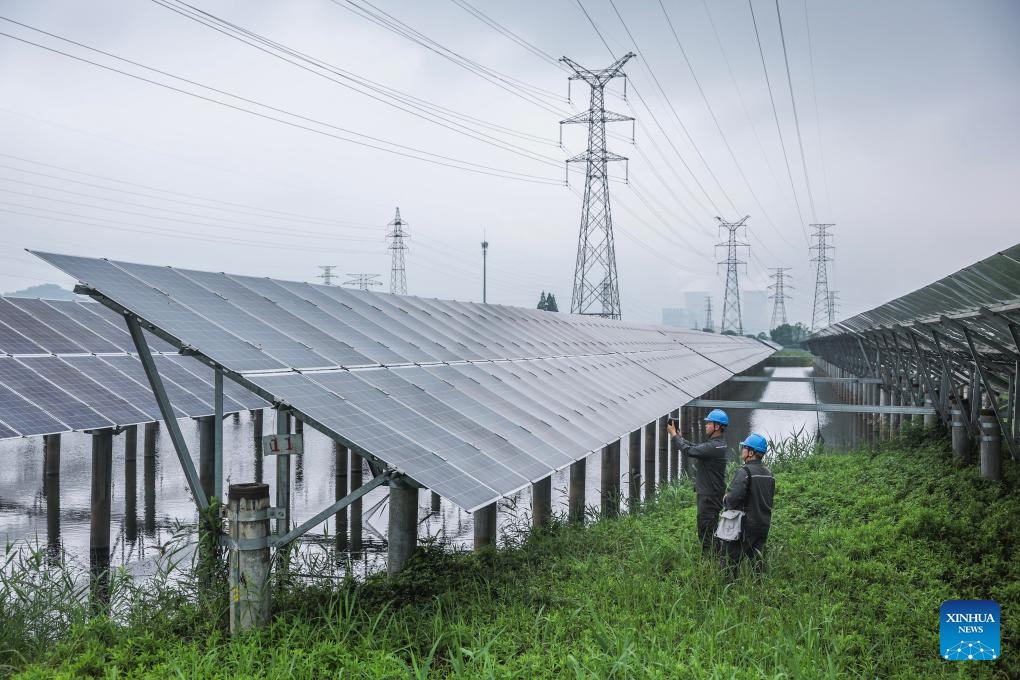
Eight Chinese leading polysilicon producers have issued public pledges to stop selling solar products below a cost benchmark, in a fresh industry effort to curb "involution-style" competition and support healthier pricing in the country's photovoltaic supply chain, the Shanghai Securities Journal reported on Friday.
Industry experts said that this move will not only help stabilize profits across the sector, but also promote the Chinese photovoltaics (PV) industry's shift toward high-quality development.
The eight companies jointly committed that the selling prices of all photovoltaic products, including tender bids, must not fall below the corresponding cost calculated under the group standard General Principles for Cost Accounting Models in the Photovoltaic Industry. Any sales below full cost must be "immediately stopped and corrected," according to the report.
The pledge was signed in Shanghai on Thursday by the companies, including four listed companies — Tongwei Solar Co, GCL Technology Holdings Limited, Daqo New Energy Co, Xinte Energy Co. The other four companies are Asia Silicon (Qinghai) Co, Xinjiang East Hope New Energy Co, Qinghai Lihao Qingneng Co, and Xinjiang Goens Energy Technology Co.
Together, the eight companies account for more than 90 percent of China's effective polysilicon production capacity, the Shanghai Securities Journal report said.
Under the initiative, the companies also agreed to accept supervision and inspections from market regulators at all levels and to strengthen mutual oversight. If they discover illegal below-cost sales, they are required to report the issue and file complaints with the industry association and the State Administration for Market Regulation (SAMR).
In addition, the firms committed to strictly implementing China's new energy-consumption standards and to proactively eliminate outdated, high-energy-consuming production capacity.
The move comes just one week after the SAMR held a solar industry price-compliance meeting on July 31, urging solar PV companies to strengthen price compliance and shift competition from price to quality.
It instructed companies to strengthen cost accounting, establish and improve price compliance systems, and carry out comprehensive self-inspections and corrective actions, according to the Xinhua News Agency.
Industry experts welcomed the initiative, saying that years of excessive competition have pushed many photovoltaic firms into losses, which is harmful to the industry's long-term development.
China's PV industry is mired in severe low-price competition, with profit margins squeezed along the entire value chain and many firms operating at a loss, Xiang Ligang, director-general of the Zhongguancun Modern Information Consumer Application Industry Technology Alliance, told the Global Times on Friday.
Xiang added that the initiative could help ensure more reasonable revenue and profit levels, which are essential for sustainable industrial development. The move also reflects a broader shift among Chinese firms toward greater coordination in responding to market pressures.
Although the industry also faces external challenges, including US tariffs on polysilicon-related products, Xiang said the main purpose of the initiative is to improve the sector's own development model rather than simply respond to foreign trade measures.
China has launched sweeping efforts to curb "involution-style" low-price competition and accelerate the phase-out of outdated industrial capacity. China's Ministry of Industry and Information Technology on July 3 held a symposium for manufacturing enterprises, focusing on accelerating the high-quality development of the photovoltaics industry, according to the Xinhua News Agency.
The symposium called for efforts to comprehensively deal with the problem of disorderly price competition in the photovoltaics industry in accordance with laws and regulations, as well as efforts to guide enterprises to improve product quality, phase out backward production capacities in an orderly manner and achieve healthy and sustainable development, Xinhua reported.
。 截至9月26日,酒店商家国庆假期预订率排名前十的省(区、市)为:辽宁、重庆、湖北、贵州、陕西、广西、福建、山东、西藏、湖南。辽宁酒店商家国庆假期平均预订率达50.41%, 10月2日达到预订峰值64.78%。其中,沈阳酒店商家平均预订率达60.83%,在全省排名靠前。 城市酒店外,度假产品成为休闲产业经济的新引擎。

三 | 作为小众赏枫地,叠加秋季泡汤住宿体验,本溪热度一路走高,截至9月26日,本溪多个中高端度假型商家已经接近满房。 据大数据测算,今年1月至8月,我省共接待游客45207.5万人次,同比增长36.1%;旅游收入4691.4亿元,同比增长43.6%。9月以来,省文化和旅游厅再次发力,推出多项文旅活动和优惠政策,以“畅游山海 欢庆华诞”为主题,发布多项文旅消费新场景及惠民举措,促进文旅消费。 责任编辑:李丹。
Current article:http://y8g.mexuanmeixuyaopinzheng.shop/list_6tsx1c/68pd2.html
Published on:03:07:25
 机构调研丨苹果概念+AI算力+具身智能 这家公司深度布局下一代封装基材 大客户折叠机项目已大批量交付
 福州港海铁联运再添新通道
 坚决反对“台独” 支持两岸统一 新党举行33周年党庆活动
 宇宙宏观个体差异的成因| 赵杰 | 量子意识
 海南省自然资源和规划厅:构建“人防+技防”耕地监测预警体系
 淄博一景区临时闭园!